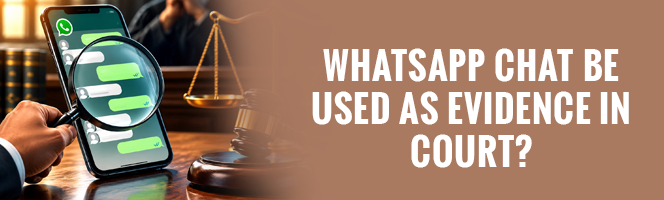
WhatsApp Chat be used as Evidence in Court?

Introduction
In this digital era, communication via WhatsApp has become an integral part of everyday life. People use instant messaging applications a lot, whether it's for personal chats, business or family communication. This has led to a growing trend of using WhatsApp chats in legal disputes and court proceedings in India.
From matrimonial disagreements to financial issues, from work-related conflicts to criminal cases, you can see how WhatsApp messages can be pivotal evidence in court. A common question that is often asked by those who are involved in any kind of family dispute or divorce proceedings is whether the WhatsApp chats are legally valid before the Indian courts.
The answer is yes. According to Indian law, WhatsApp conversations can be utilized as electronic proof in case they meet with particular legal prerequisites. An experienced divorce attorney will use digital communication records to establish allegations of hurt, harassment, threats, financial issues, and infidelity.
Legal Validity of WhatsApp Chats in India
According to Indian law, electronic records are admissible as evidence in court proceedings under the Indian Evidence Act. WhatsApp messages are digital communications and therefore are considered electronic evidence.
If authenticity and genuineness are established, courts can accept WhatsApp chats as evidence in court. Documents, images, videos, voice notes, chat logs and screenshots can all be important in court cases.
But sometimes, just showing screenshots is not sufficient. Courts typically evaluate the authenticity, integrity, and legality of the chats.
Significance of WhatsApp Chats in Divorce Cases
In matrimonial matters, WhatsApp chats are crucial. Such chats can be used by a divorce lawyer to set facts about the relationship between the spouses.
WhatsApp messages can be used to establish mental cruelty, abusive behavior, threats, admissions, financial requests, and evidence of infidelity. Digital communication plays a critical role in many hotly contested divorce cases in determining the actions of the parties.
Communications between the partners can sometimes show the true context of their relationship and can contradict the testimony given to the court. As a result of this, electronic communication is now frequently used in family disputes.
Types of WhatsApp chats used as evidence
Personal Conversations
Husband and wife communications can be employed to create patterns of behavior, admissions, threats or emotional harassment.
Financial Discussions
Communication about money transfers, dowry requests, maintenance payments, or real estate disagreements could be relevant evidence in court.
Extra-Marital Affair Evidence
For some, WhatsApp chats are displayed revealing inappropriate relationships or communication with third parties.
Threatening Messages
Sexting to someone that is abusive or threatening can backfire and be used as evidence of domestic violence, intimidation, or mental cruelty.
Business and Transaction Records
In civil and commercial cases, WhatsApp exchanges can be utilized for evidencing commitments, arrangements, or monetary exchanges.
Conditions for Admissibility of Whatsapp Chats
To qualify for admission of WhatsApp chats, the following are required:
While WhatsApp chats can be used as evidence in court, courts need to be properly verified before accepting them. Electronic records are of high importance with regard to their authenticity.
The party using WhatsApp chats is required to demonstrate that the messages are authentic and not tampered with. Phone records, metadata, backup records, times and device information can all be reviewed in court.
In India, electronic evidence is often required to be certified in accordance with the provisions of Section 65B of the Indian Evidence Act. This certificate verifies how the electronic record has been created and contributes to establishing authenticity.
If not properly complied with, electronic evidence can be objected to in proceedings.
The role of a divorce lawyer when it comes to electronic evidence
A professional divorce lawyer is crucial in presenting WhatsApp chats effectively in court. The improper handling of electronic evidence can severely undermine a case.
A lawyer helps in:
- Preserving original chats
- Gathering legally admissible screenshots
- Getting Section 65B certificates
- Ensuring authenticity of electronic records
- Providing evidence effectively to the court
- Addressing the objections of the opposing party.
Matrimonial cases can be very emotional and can include allegations of infidelity, claims of infidelity, and other allegations that can be difficult to prove. Properly documented digital evidence can help bolster a case.
Is it possible to recover Deleted WhatsApp Chats?
In certain cases, deleted chats can be recovered via backups, cloud storage, or forensic examination. If electronic evidence is critical to the case, a court may deem it necessary to permit forensic examination of the device.
But privacy and legal issues may arise when accessing another person's phone, or their personal information. Evidence must always be gathered in a lawful and ethical manner.
A divorce lawyer typically recommends that clients refrain from using illegal ways to get private chats as this can lead to further legal complications.
The difficulties of using WhatsApp Chats as evidence
Although WhatsApp chats are becoming more and more relevant, they also pose some legal challenges. The digital evidence may be subject to editing or manipulation, which can make it difficult for courts to be convinced.
Confusion can result from fake chats, unfinished conversations, and out-of-context messages. Courts then take a close look at the circumstances before depending on electronic communication.
Another issue occurs when parties claim that the phone number or device does not belong to them. Under these circumstances, further evidence could be needed to prove authenticity.
Due to these concerns, it is important to document and have legal advice when presenting electronic records in court.
Judicial Approach Towards Electronic Evidence
The importance of digital communication in today's disputes has been increasingly recognized by Indian courts. When legally required, electronic evidence such as WhatsApp chats has been recognized in court in various judgments.
Courts are aware that today's relationships and transactions are often digital. Thus, electronic evidence has become a part of legal proceedings in matrimonial, civil and criminal cases.
Meanwhile, the courts are wary of making sure that digital evidence is admissible and uncontroversial.
Conclusion
In today's legal battles, WhatsApp chats are a significant piece of electronic evidence. These days, digital communication is a big part of court cases, whether they involve matrimonial disputes, financial disagreements or criminal cases.
In India, WhatsApp chats are admissible in court as evidence, as long as they adhere to the legal requirements for the authenticity and admissibility of evidence. These conversations can be used in divorce and family law cases to prove mental cruelty, harassment, financial demands, and relationship issues.
Electronic evidence is a complex process with technical and legal aspects, and it's always best to get advice from an experienced divorce lawyer. The handling of digital records can make a big difference to the case.
Latest Blog
Learn about BNS Section 69, including false promises to marry, criminal liability, bail options, relevant evidence, and available legal remedies.
Learn about the legal remedies available when police refuse to register an FIR for a cognizable offence under the BNSS. Understand the role of the Superintendent of Police, Magistrate, Section 173(4), Section 175(3), and Zero FIR.
Learn how professional legal drafting can protect your rights, prevent disputes, reduce legal risks, and strengthen your position before a case reaches court.
Understand when a husband can seek maintenance from his wife under Indian law. Learn about interim maintenance, financial dependency, court factors, and legal remedies.

Know the immediate steps to report online fraud, recover your money, file a cyber crime complaint, and seek legal assistance in India.
Social Media Defamation in India: What Indian Law Says explains how false statements, fake reviews, edited images, and misleading social media posts can damage the reputation of individuals and businesses.

This blog explains the importance of professionally drafted business contracts, including Vendor Contract Agreements, Client Service Agreements, and other commercial legal documents.
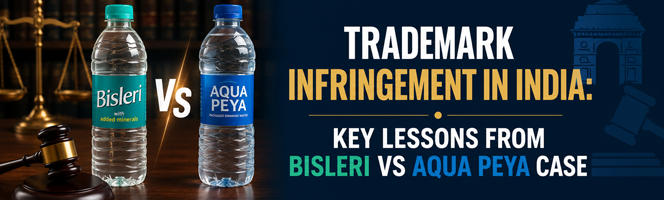
The Bisleri vs Aqua Peya trademark dispute highlights the importance of protecting intellectual property rights and maintaining a unique brand identity in India.
Explore the legal implications of AI-generated brand names, trademarks, branding risks, and the steps businesses should take to secure trademark protection.