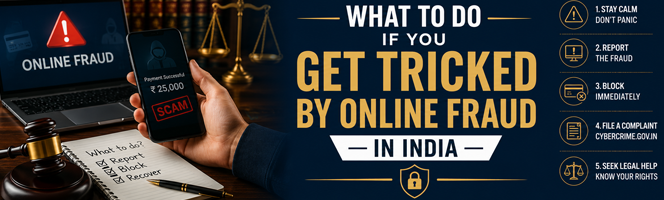
What to Do If You Get Tricked by Online Fraud in India

Online fraud is rapidly becoming one of the fastest-growing cybercrimes in India and is impacting individuals and businesses. From online banking fraud, UPI payment fraud, Google Pay fraud, PhonePe fraud, Paytm fraud to credit card fraud and debit card fraud, hackers are always coming up with new tactics to get hold of your money and personal details. Once you realize you've been tricked into an online scam, you can greatly improve the likelihood that you will recover your lost funds and prevent it from happening again in the future. Knowing the options for legal remedies in Indian law is also crucial for each victim.
Online Fraud in India: Decoding the Evolving Threat
With the growth of digital payments, internet banking, mobile wallets, and online shopping platforms, online fraud incidence in India is rapidly gaining momentum. Phishing emails, fake customer care numbers, malicious links, fake investment schemes, QR code scams, identity theft, and impersonation are all methods frequently employed to deceive the victim. Unauthorised bank transfer, fake UPI transaction, cloned debit/credit card or fake payment application is a form of financial fraud. Knowing what these risks are is the first step to fighting cybercrime.
What to do right after being scammed online?
When you notice that you are being defrauded online, it is crucial to get in touch with your financial institution or payment service provider and inform them regarding the fraudulent transaction so they can freeze your account or block it if needed. In case of online banking fraud, Google Pay fraud, PhonePe fraud, Paytm fraud, or UPI payment fraud, reporting the matter at the earliest is a great chance to recover the money. Keep copies of the transaction, screenshots, all messages, emails, and any communication with the fraudster as these will be needed for investigation.
What is the process to report online fraud in India?
Victim should file the complaint of online fraud through the National Cyber Crime Reporting Portal or Cyber Crime Helpline immediately. In addition to informing about the incident through the internet, the victim shall also submit a written complaint to the Cyber Crime Police Station of the jurisdiction. When reported on time, the authorities can follow the transaction and take any required legal steps. Giving a full account of the transaction, reference, bank statements, mobile numbers, screenshots, etc, assist investigators in their work.
Report Cyber Crime and File Cyber Crime Complaint
Each victim will make a report about cyber crime at the earliest time and file a cyber crime complaint with the appropriate authorities. The complaint should include the complete details of the fraud such as date, time, fraud amount, bank details, UPI ID, payment application used, communication with accused, supporting evidence, etc. It is also important for businesses impacted by cyber fraud to keep their server logs, emails and digital records that could help with the investigation. Failing to file a complaint could limit the ability to track the fraudulent transaction.
Online Banking Fraud, UPI Payment Fraud & Digital Payment Scams
The most prevalent financial frauds of today include online banking, UPI payment, Google Pay fraud, PhonePe fraud, and Paytm fraud. Scammers can also pretend to be a bank employee, pass off payment links, ask for OTPs or exploit QR codes to access bank accounts. Likewise, credit card fraud and debit card fraud can happen by cloning the credit cards, tricking into the phishing websites or unauthorized transactions on the Internet. No users should ever give their OTP, password, CVV numbers, or banking details to strangers.
Can a Lawyer be able to assist in the case of online Fraud?
Yes. An attorney may help victims in online scam cases in preparing legal notices, advising on recovery options, helping victims file complaints with the Cyber Crime Authorities, coordinating with banks and representing victims before courts or other legal forums as needed. When a significant amount of money is lost, identity theft or business fraud occur, or there are disagreements with financial institutions over unauthorized transactions, legal help could be a lifesaver.
Knowing how to avoid being scammed online is essential
To keep internet banking fraud at bay, one needs to be careful in the use of internet banking. Be sure to verify payments before sending, use strong passwords, set up two-step verification, check bank statements, don't click on links in emails you didn't expect, and don't provide confidential banking details. Install payment software from trusted sources and ensure your devices are protected by the most current security software. Keeping up to date with awareness and reporting is the best weapon against cybercrime.
Frequently Asked Questions
1. What to do if you are a victim of internet fraud?
Contact your bank immediately, block the transaction if possible, keep a record and report to the Cyber Crime authorities.
2. What should I do if I am the victim of online fraud in India?
Online fraud can be reported to the National Cyber Crime Reporting Portal, Cyber Crime Helpline and the Cyber Crime Police Station in the area.
3. What can I do if I lose money in an online scam?
Promptly reporting to your bank and Cyber Crime Authorities may help to get the fraudulent transaction frozen and recover your money.
4. What documents need to be submitted for a complaint of a cyber-crime?
Typically, you will need to include transaction details, bank statements, screenshots, communication records, payment references, identity proof and other supporting evidence.
5. Is there a lawyer that can assist in an online fraud case?
Yes. A lawyer may offer legal advice and help with complaints, recovery proceedings and representation to competent authorities.
6. What are the most frequent online frauds?
The most common ones are online banking fraud, UPI payment fraud, Google Pay fraud, PhonePe fraud, Paytm fraud, internet banking fraud, debit card fraud, credit card fraud, phishing, and identity theft.
7. What is the Cyber Crime Helpline Number in India ?
In India, the Cyber Crime Helpline is: 1930
8. What are some of the ways that you should be able to protect yourself from online fraud?
Always use a strong password, use two-factor authentication, don't give out OTPs, confirm payment requests, and report suspicious activity right away.
Latest Blog

Learn how professional legal drafting can protect your rights, prevent disputes, reduce legal risks, and strengthen your position before a case reaches court.

Understand when a husband can seek maintenance from his wife under Indian law. Learn about interim maintenance, financial dependency, court factors, and legal remedies.
Know the immediate steps to report online fraud, recover your money, file a cyber crime complaint, and seek legal assistance in India.

Social Media Defamation in India: What Indian Law Says explains how false statements, fake reviews, edited images, and misleading social media posts can damage the reputation of individuals and businesses.

This blog explains the importance of professionally drafted business contracts, including Vendor Contract Agreements, Client Service Agreements, and other commercial legal documents.

The Bisleri vs Aqua Peya trademark dispute highlights the importance of protecting intellectual property rights and maintaining a unique brand identity in India.

Explore the legal implications of AI-generated brand names, trademarks, branding risks, and the steps businesses should take to secure trademark protection.

WhatsApp chats have become an important form of electronic evidence in Indian legal proceedings, including divorce, family disputes, civil matters, and criminal cases.

This blog explains the importance of Intellectual Property (IP) protection for Instagram businesses, creators, influencers, and startups. It highlights how trademark registration helps protect brand identity, logos, content, and business reputation.