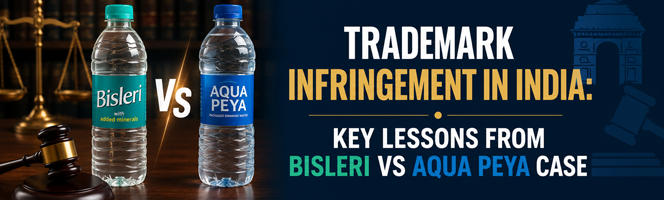
Trademark Infringement in India: Key Lessons from Bisleri vs Aqua Peya Case

It takes years of investment, marketing and consumer trust for building a successful brand. But one instance of copying another brand's identity can have serious legal repercussions. The recent Bisleri Trademark Case involving Aqua Peya is a good reminder for businesses the significance of protecting IP rights. This Aqua Peya Trademark Infringement case is an example of how Trademark Infringement in India is not limited to merely just a brand name but also relates to packaging, trade dress and the overall commercial impression of a product.
1. Infringement of Intellectual Property Rights – Trademark in India
Trademark infringement in India is said to have been committed if any person or company uses a trademark which is identical or deceptively similar to the registered trademark, which causes a likelihood of confusion among the customers. Registered trademarks are protected by the Trade Marks Act, 1999 and the registered proprietor enjoys exclusive rights to the trademark.
Courts do not compare names in Trademark Infringement in India. They also analyze the general look of the products, logos, colour combinations, labels, packaging and trade dress. The goal is to see if an average consumer would expect that both products are from the same source.
In the business world, it is crucial to be aware of what constitutes Trademark Infringement in India before proceeding with a product launch or rebranding an existing product.
2. Bisleri Trademark Case
The Bisleri Trademark Case came to light because of the allegation that the packaging of Aqua Peya was similar to Bisleri's frequently seen bottled water products. The whole issue caught more attention after Aqua Peya had its own appearance on Shark tank India where questions were raised about the similarity in the packaging with the other established market players.
Bisleri claimed that Bisleri's trade dress, packaging, colour scheme and general presentation was deceptively similar and could lead to consumer confusion in Bisleri Trademark Case. The company claimed it had invested many years in its brand name and wanted legal protection to be granted for that investment.
In the interim, the Bombay High Court, while hearing the case, made prima facie observations on the same aspects of similarity in packaging and trade dress in favour of Bisleri. The Bisleri Trademark Case illustrates that trademark protection goes beyond the actual brand.
3. Aqua Peya Trademark Dispute
Aqua Peya Trademark Dispute emerged as a significant case for start-ups and new businesses. The main point was whether the overall presentation of the Aqua Peya would lead consumers in believing that they were related to Bisleri.
The Aqua Peya Trademark Dispute highlights the fact that even if the name of a product is changed, if the package, label, colour combinations or trade dress is still substantially the same as a well-known brand, it will not suffice to avoid liability.
The ruling in the Aqua Peya Trademark Dispute underscores the need to establish a unique brand identity rather than one that's similar to that of an established competitor.
4. Trademark Infringement Laws
The primary laws in India that govern the trademark infringement laws are the Trademark Act of 1999. These laws allow registered proprietors to enjoy the monopoly of using their trademarks and also to take action against infringing use.
Trademark Infringement Laws allow the courts to issue injunctions, damages or accounts of profits, delivery and destruction of infringing goods, and prevent further infringement. Trademark Infringement Laws have been created to safeguard businesses and consumers from deceptive and unfair competition.
Companies should continually monitor their brand and make a decision to ensure it does not infringe on the Trademark Infringement Laws before going into the market.
5. Trademark Infringement Case India
Each of the Trademark Infringement Case India is a case by itself. Courts take into account a number of considerations, such as similarity of appearance, similarity of sound, similarity of concept, nature of goods, channels of trade, class of consumers, and the probability of confusion.
In the Trademark Infringement Case India between Bisleri and Aqua Peya, Trade Dress and Overall Commercial Impression also was considered. Just changing the brand name may not be enough when there is customer confusion caused by the packaging.
Those companies that are engaged in any of the Trademark Infringement Case India, should seek prompt legal counseling to defend their commercial interests.
6. Trademark Dispute Lawyer India
An experienced Trademark Dispute Lawyer India assists businesses in conducting trademark searches, evaluating branding strategies, filing trademark applications, reacting to legal notices, fighting infringement claims and representing clients in court.
A Trademark Dispute Lawyer India can help you avoid expensive litigation and re-branding efforts by consulting before introducing a new product. A Trademark Dispute Lawyer India also helps in enforcing Trademark rights against the infringers by means of proper legal processes.
7. Trademark Infringement Legal Advice
It is very important for startups, manufacturers, retailers and brand owners to secure timely Trademark Infringement Legal Advice. Trademark Clearing Searches should be performed by businesses before adopting a business name, a trademark or any packaging design.
Another aspect of Professional Trademark Infringement Legal Advice provides a look into packaging, trade dress, marketing materials and branding strategies, determining potential legal pitfalls. Early Consultation for legal advice on Trademark Infringement is much more affordable and cost efficient than defending a Trademark Infringement proceeding after the product has been launched.
FAQs
1. What is Trademark infringement in India?
Trademark infringement in India means to use a registered trademark or a deceptively similar mark that can mislead consumers about the origin of the goods/services.
2. What was decided in the Bisleri vs Aqua Peya case?
Bisleri claimed that Aqua Peya's packaging, the colour scheme and trade dress was deceptively similar to its famous bottled water products and launched a trademark suit before the Bombay High Court.
3. How to prevent businesses from infringing on trademarks?
Companies should search the market for trademarks, develop creative branding, stay away from trade dress and get legal counsel prior to introduction of products to market.
4. What are the penalties for trademark infringement?
Courts can issue injunctions, damages or accounts of profits, order seizure/destruction of infringing goods and other remedies under the Trade Marks Act, 1999.
5. What is the trademark dispute resolution process in India?
Indian courts consider the similarity of the competing marks based on its overall similarity, such as its visual similarity, phonetic similarity, meaning in mind, trade dress, nature of goods and the possibility of consumer confusion.
6. Are similar brand names eligible for trademark?
In general, brand names or packaging which are "closely similar" and are likely to create consumer confusion may be denied registration or may be subject to an infringement action (depending on the circumstances of each case).
Latest Blog

Learn how professional legal drafting can protect your rights, prevent disputes, reduce legal risks, and strengthen your position before a case reaches court.

Understand when a husband can seek maintenance from his wife under Indian law. Learn about interim maintenance, financial dependency, court factors, and legal remedies.

Know the immediate steps to report online fraud, recover your money, file a cyber crime complaint, and seek legal assistance in India.

Social Media Defamation in India: What Indian Law Says explains how false statements, fake reviews, edited images, and misleading social media posts can damage the reputation of individuals and businesses.

This blog explains the importance of professionally drafted business contracts, including Vendor Contract Agreements, Client Service Agreements, and other commercial legal documents.
The Bisleri vs Aqua Peya trademark dispute highlights the importance of protecting intellectual property rights and maintaining a unique brand identity in India.

Explore the legal implications of AI-generated brand names, trademarks, branding risks, and the steps businesses should take to secure trademark protection.

WhatsApp chats have become an important form of electronic evidence in Indian legal proceedings, including divorce, family disputes, civil matters, and criminal cases.

This blog explains the importance of Intellectual Property (IP) protection for Instagram businesses, creators, influencers, and startups. It highlights how trademark registration helps protect brand identity, logos, content, and business reputation.