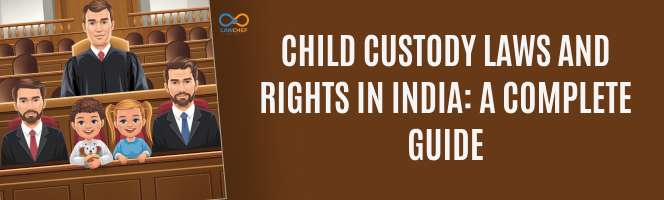
Child Custody Laws and Rights in India: A Complete Guide

The issue of child custody is a crucial and often highly charged one that emerges during divorce or separation proceedings. In India, different types of custody under the legal system are established to ensure the best interests of the child are met. For parents handling this difficult task, it is essential to understand the difference between legal and physical custody and Indian child custody laws that regulate them. However, obtaining advice from experienced child custody lawyers can make an enormous difference in delivering an equitable and beneficial result for both parents and children alike.
This blog, which will discuss legal custody and physical custody as the two main types of child custody in India while also examining the role of child custody lawyers and the legislation that has provision for such matters here, is your guide to all that.
What is Legal Custody?
Legal custody is the right of one parent to make important decisions that, generally, affect their child's upbringing. Such decisions frequently include those about the child's education, healthcare, religious practices and overall well-being. Under child custody laws in India, legal custody comes in two forms:
- Sole Legal Custody: One parent has sole authority to decide and need not consult the other parent with regard to the life of their children.
- Joint Legal Custody: Both parents are responsible for making decisions affecting the child, so they must communicate and work together effectively in order to reach agreement.
Given its importance under Indian child custody laws, we give full coverage to legal custody in this section. Since the courts tend to favour joint legal custody so that both parents may remain involved in their child's life, child custody lawyers can help guide a case for either version. It is to the advantage of all concerned that the course taken should be in accordance with what is best for the child's future.
What is Physical Custody?
Physical custody, by contrast, is the legal concept that determines where a child will live and which parent will be responsible for day-to-day care. This involves such basics as food and shelter. Like legal custody, physical custody under child custody laws in India can be arranged variously:
- Sole Physical Custody: The child lives with one parent primarily, and the other parent may have visitation rights.
- Joint Physical Custody: The child spends a considerable amount of time with both parents on a regular basis; indeed, time is often split half-and-half or an agreed arrangement is found that works for the family.
In cases of joint physical custody, the child can then rotate between his or her parents' homes, so both parents continue to have an active share in his daily life. Yet the prospect of such an arrangement is carefully considered by the courts in India for practicality and whether it is really in the best interests of the child. Social factors have to be taken into view - such as a great distance between parent's houses or the need for children to stay at one school - are critical in deciding where custody ought to lie. Child custody lawyers, therefore, are often employed by parents who are unable to reach agreement on this issue and utilized for the benefit of all concerned.
Key Differences between Legal and Physical Custody
While both legal and physical custody are fundamentally important pieces of child custody laws in India, they serve different purposes:
- Legal Custody: This concept involves having decision-making power.
- Physical Custody: This concept has to do with where the child lives and how children are cared for on a day-to-day basis.
A parent may have a greater, or sole, physical custody while both parents share legal custody. It depends on what the family's circumstances are and what the court feels is in best interest for your child. Child custody lawyers play a crucial role in helping their clients understand these subtleties and fighting for their own type of custody.
The Laws Governing Child Custody in India
There are many laws in India governing child custody. The most important one is called the Guardians and Wards Act, 1890. This Act applies to everyone, citizens of regardless if they are secularists or religious, and it stipulates that control over a child should be given to those who are guardians. Nevertheless, depending on their religion personal laws will also come into play when the parents get divorced, since:
- For Hindus: The Hindu Minority and Guardianship Act of 1956 is applicable.
- For Muslims: Custody issues are handled according to Muslim Personal Law.
- For Christians and Parsis: Indian Divorce Act, 1869 as well as Parsi Marriage and Divorce Act, 1936 respectively.
In India, child custody matters go to court for resolution. Several factors are taken into consideration when decisions are made about custody arrangements: the child's age and physical condition, income levels of both parents, and their ability to provide a stable home environment are among these. Child custody lawyers play a vital part in interpreting these laws and presenting evidence that supports their clients 'case.
The Role of Child Custody Lawyers
While both legal and physical custody are fundamentally important pieces of child custody laws in India, they serve different purposes:
- Explaining Legal Rights: They help parents understand their rights under child custody laws in India and what to expect during the legal process.
- Negotiating Agreements: Skilled child custody lawyers can facilitate negotiations between parents to reach amicable custody arrangements without prolonged court battles.
- Representing in Court: If a case goes to trial, child custody lawyers advocate for their client's preferred custody type, presenting evidence and arguments that align with the child's best interests.
- Drafting Custody Agreements: They ensure that custody agreements are legally sound and enforceable, preventing future disputes.
Conclusion
It is essential for any Indian parent facing separation or divorce to understand the different kinds of child custody available– both legal and physical so on. Legal custody decides who gets to make decisions. Physical custody is concerned where a child lives. Both are covered by the Indian Child Custody Law, and in all cases the child’s welfare comes first. Parents can better handle this difficult situation by using the services of a child custody lawyer who is both qualified and has experience in the field. Whether you go for sole custody or putting together an arrangement resembling joint parenthood in the home, the goal should be to be knowledgeable and well-prepared. You can ensure that your child's future as well as your rights as a parent are protected with proper legal counsel.
Latest Blog

Learn how professional legal drafting can protect your rights, prevent disputes, reduce legal risks, and strengthen your position before a case reaches court.
Understand when a husband can seek maintenance from his wife under Indian law. Learn about interim maintenance, financial dependency, court factors, and legal remedies.

Know the immediate steps to report online fraud, recover your money, file a cyber crime complaint, and seek legal assistance in India.

Social Media Defamation in India: What Indian Law Says explains how false statements, fake reviews, edited images, and misleading social media posts can damage the reputation of individuals and businesses.

This blog explains the importance of professionally drafted business contracts, including Vendor Contract Agreements, Client Service Agreements, and other commercial legal documents.
The Bisleri vs Aqua Peya trademark dispute highlights the importance of protecting intellectual property rights and maintaining a unique brand identity in India.

Explore the legal implications of AI-generated brand names, trademarks, branding risks, and the steps businesses should take to secure trademark protection.

WhatsApp chats have become an important form of electronic evidence in Indian legal proceedings, including divorce, family disputes, civil matters, and criminal cases.

This blog explains the importance of Intellectual Property (IP) protection for Instagram businesses, creators, influencers, and startups. It highlights how trademark registration helps protect brand identity, logos, content, and business reputation.