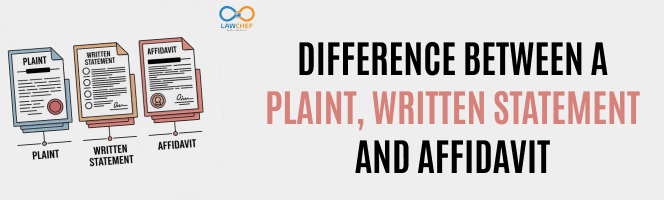
Difference between a Plaint, Written Statement and Affidavit

The Indian legal system has three documents, which tend to confuse litigants- Plaint, Written Statement and Affidavit. They all fulfil different functions, have a particular format, and have different legal consequences. These differences are very crucial not only to litigation but to any person who has to deal with documentation, dispute resolution or drafting a contract. A lot of individuals seek the advice of lawyers in writing agreements and litigation professionals in making sure that their documents are correct, valid and legally binding.
This blog describes the meaning of plaint vs written statement, the difference between the two and an affidavit and why it is necessary to take professional advice particularly in drafting an agreement in Delhi to avoid mistakes in the law.
What Is a Plaint?
A plaint is a document which constitutes a civil suit. It is submitted by the plaintiff, i.e. the one who argues that something has gone wrong with him, and it forms the basis of the case.
A plaintiffs has to explicitly describe:
- Nature of the grievance
- Cause of action
- Facts of the case
- Relief or claim sought
- Jurisdiction of the court
The plaint is always the initial step in the debate of which one is better, plaint or written statement. It establishes the mood of the conflict and provides the court with a clear understanding of what is being demanded by the plaintiff. Since any small mistake can cause a postponement of the process or undermine the claim, a significant number of people use the services of legal professionals who also specialize in drafting agreements in Delhi since these professionals are familiar with the structured legal writing.
What Is a Written Statement?
The response of the defendant to the plaint is in the form of a written statement. It should also provide a specific reply to every charge that was brought by the plaintiff. The aim is to refute, acknowledge or justify the utterances in the plaint.
Important sections of a written statement are:
- Response to the plaint on a point-by-point basis.
- Legal defenses
- Evidence that favors the defense.
- Counter-claims, if any
One can compare plaint vs written statement where the written statement is the defensive statement. It defends the rights of the defendant and assists him or her in telling a side of the story. Similar to the way agreements should be written to the letter, litigating attorneys and drafting attorneys can be hired because these experts already know how to write agreement structures and draft them without errors.
What Is an Affidavit?
An affidavit has nothing in common with a plaint and a written statement. It is an oath-sworn testimony in the presence of a licensed official. The affidavit is signed by the individual presenting the affidavit (the deponent) who ascertains that the information contained in it is as true as it best knows.
An affidavit is used for:
- Submitting evidence
- Verification of facts
- Favorable requests and applications.
- Declaring compliance
The only distinction is that an affidavit is a statement of truth, and not a pleading. It neither begins a case, nor is a response to any pleading. Rather it is supportive evidence. A great number of the professionals providing the services of drafting agreements in Delhi also help clients with affidavits as the drafting regulations demand that the texts should be clear, precise, and properly formatted.
Plaint vs Written Statement vs Affidavit
In order to comprehend the use of plaint vs written statement and the difference between affidavits, the following is a simplified version of the distinction:
Purpose
- A plaint starts the case.
- A written statement is an exoneration of the charges.
- The claims are backed by sworn facts in an affidavit.
Who Files It?
- The plaintiff files a plaint.
- The defendant files a written statement.
- Any party (or witness) may file an affidavit.
Role in Court
- Pleading is the plaint and the written statement.
- An affidavit refers to evidence or supportive declaration.
Legal Value
- A plaint frames the issues.
- Defence is given in the form of a written statement.
- An affidavit is the evidence and is solemn on oath.
Verification
- Plaint and written statement must be verified and not sworn.
- The swearing of an affidavit should be under oath by an oath commissioner or notary.
Why Proper Drafting Matters
Wrong or inadequately written legal documents cause:
- Rejections
- Adjournments
- Weak cases
- Loss of rights
- Adverse orders
That is why even litigants practice lawyers to write a contract, as such people are trained to be clear, structured and legal. The same applies, whether it is writing a plaint, a written statement, affidavit, or a commercial contract, the language has to be accurate, the facts have to be presented in order and legal references have to be correct.
Significance of Drafting of Professional Agreement
A lot of individuals believe that litigation and agreement drafting are not connected. The reality is that both demand the same fundamental ability, which is legal finesse. Lawyers who provide the service of drafting agreements in Delhi have solid drafting knowledge that will equally be useful in pleadings and affidavits.
Whether it will be a service agreement, partnership deed, or contract between the business, competent lawyers to draft the agreement will make sure the paper is binding and minimize future conflict. This knowledge is automatically carried over to litigation preparation such as plaints and written statements which is more trustworthy and professionally organized.
Conclusion
Knowledge on the distinction between plaint, written statement and affidavit can empower people to go through the legal procedures without struggling. When it comes to the plaint vs written statement, it is important to keep in mind that one party will be the initiator of the case and the other one will be the defender. An affidavit is however different, being a sworn statement of truth.
In both litigation and business documentations, professional skills are a concern. Hiring law firms to write the agreement or a good agreement writing firms in Delhi is a sure way to make sure that your legal documents, be it contracts, plaints, written statements, or affidavits are readable, right, and legally sound.
Latest Blog
Learn how professional legal drafting can protect your rights, prevent disputes, reduce legal risks, and strengthen your position before a case reaches court.
Understand when a husband can seek maintenance from his wife under Indian law. Learn about interim maintenance, financial dependency, court factors, and legal remedies.

Know the immediate steps to report online fraud, recover your money, file a cyber crime complaint, and seek legal assistance in India.
Social Media Defamation in India: What Indian Law Says explains how false statements, fake reviews, edited images, and misleading social media posts can damage the reputation of individuals and businesses.

This blog explains the importance of professionally drafted business contracts, including Vendor Contract Agreements, Client Service Agreements, and other commercial legal documents.
The Bisleri vs Aqua Peya trademark dispute highlights the importance of protecting intellectual property rights and maintaining a unique brand identity in India.

Explore the legal implications of AI-generated brand names, trademarks, branding risks, and the steps businesses should take to secure trademark protection.

WhatsApp chats have become an important form of electronic evidence in Indian legal proceedings, including divorce, family disputes, civil matters, and criminal cases.

This blog explains the importance of Intellectual Property (IP) protection for Instagram businesses, creators, influencers, and startups. It highlights how trademark registration helps protect brand identity, logos, content, and business reputation.