Contract Drafting and Essentials to consider in Contracts

Introduction
All business and legal relationships are based on contracts. A drafted contract outlines your rights, liabilities and reparation in case of breach whether it is on a business, employing a person, purchasing a house or on a partnership. Contract drafting is not an exercise of placing words on the paper only but a skillful legal tool of guaranteeing clarity, enforceability and protection of interests. An inadequately written agreement may result in misunderstandings, losses, and court hearings, whereas an accurate and balanced contract encourages honesty and sincerity between the parties.
What Is Contract Drafting?
Contract drafting can be described as a procedure of writing a legally binding document which states terms and conditions agreed upon by two or more parties. It includes the conversion of a business interpretation or a business deal into legal expressions in which responsibilities, rights, schedules and effects of non-fulfillment are set. Drafting is to reduce ambiguity and protect both sides on the law, Indian Contract Act, 1872.
The significance of Contract Drafting.
Contract drafting is important as it helps avoid conflict prior to its emergence. A well-written contract:
- Gives a definite model on performance and duties.
- Reduces risks by appropriate distribution of responsibility.
- Maintains the observance of statutory and regulatory provisions.
- Can be used as an acceptable proof in courts in case of conflict.
An incomplete or vague contract is usually the source of legal disputes. As such, spending time in drafting well is a form of legal security investment.
Clauses to Be Consider in Drafting of Contract
1. No ambiguity in identification of parties.
Any contract has to start with a clear identification of the parties involved. These are their legal names, registered addresses and position in the agreement. When it is a company then specify the registration of the company and the signatory. The identification of parties eliminates confusion about the party to perform or make payment.
2. The Specification of the Purpose and Scope.
In the course of a contract, its purpose and scope are to be mentioned. This is to make sure that the two parties know the purpose of their relationship. Agree on what shall be exchanged (goods, services or actions). Lack of transparency in the scope frequently causes a clash in the execution process.
3. Consideration Clause
Consideration is what each of the parties promises the other in exchange of the promise-either money, services, goods or promises. Section 2(d) of Indian Contract Act, 1872 states that a valid contract should have a lawful consideration. Clarify the terms of payment, the amount owed, the mode of payment, timeline and outcomes of not meeting the payments.
4. Rights and Obligations
All the contracts must clearly stipulate what each party is supposed to do and what are their rights. The commitments should be attainable, quantifiable and limited. Amorphous or unilateral commitments may culminate into default and legal troubles.
5. Representations and Warranties.
They are facts that are asserted by parties in order to guarantee the other party on certain terms. They create confidence and minimize doubt. As an example, a seller makes a warranty that he or she is a lawful owner of goods being sold. The existence of breach of warranties damages is usually involved and thus, it should be included.
6. Confidentiality/ Non-Disclosure.
In the contemporary information-driven society, confidentiality is crucial. The contracts should include a confidentiality/non-disclosure term to protect confidential business data, trade secrets or personal information. This is a provision that guarantees that none of the parties misuses the data acquired in the process of the contract.
7. Term and Termination Clause
The terms in which a contract is terminated should be explicitly stated and the period in which the contract may be terminated. Indicate whether or not the contract will be renewed automatically after a specific time. There must also be termination clauses, which contain the notice and early termination consequences, which will be fair to both parties.
8. Dispute Resolution and Law Governing.
Despite the level of writing a good contract, they can still result in disputes. Thus, any agreement should include a dispute resolution provision explaining the way the conflicts are going to be managed. This can be arbitration, mediation or going to court. The governing law provision determines the laws of which jurisdiction can be used to settle disputes.
9. Limitation of Liability and Indemnity.
An indemnity clause is a guarantee that one of the parties would pay the other one the losses it has caused as a result of its actions. The amount of damages that one can claim is limited by the limitation of liability clause; hence one is not exposed to unlimited liability. All these clauses combine risk and shield parties against unexpected outcomes.
10. Force Majeure Clause
This provision offers a remedy to the parties in situations where they cannot perform the parties despite factors that are beyond their control like natural disasters, pandemics, or war. It stays the obligations without any penalty and it shields claims of breach under extraordinary circumstances.
11. Intellectual Property Rights (IPR).
When the agreement refers to the creation or utilization of intellectual property such as designs, software or trademarks, make sure that the ownership and the right to use is specified. State whether the IP will belong to the client, creator, or both, and provide limitations on the use of the IP at the termination of the contract.
12. Entire Agreement Clause and Amendment Clause.
A whole agreement clause establishes the fact that the written agreement is the full understanding between parties even without the verbal or informal agreements. The clause in the amendment is that any change should always be done in writing and by mutual consent thus no changes can be made at any given time unilaterally.
13. Signatures and Execution
Only by signing the contract by all the parties, a valid contract is formed. Make sure that the signature block contains complete names, designations and dates. In the case of corporate entities, the authorized signatory will be required to sign on behalf of the company using a company seal (where necessary). The electronic signatures are also legally accepted in the Information Technology Act, 2000 on digital contracts.
Conclusion
The drafting of contracts is not an administrative one-two-three job, it is the basis of all safe and transparent legal relations. An effective contract ensures protection to interests, enhancement of accountability, and avoidance of conflicts. Knowledge about the basics of drafting the contract enables individuals and businesses to get into an agreement confidently and clearly. Never compromise on the legality of your contracts, make them accurate, and specific to your unique needs because a single clause that is bypassed may alter the results of a legal relationship.
Latest Blog

Learn how professional legal drafting can protect your rights, prevent disputes, reduce legal risks, and strengthen your position before a case reaches court.
Understand when a husband can seek maintenance from his wife under Indian law. Learn about interim maintenance, financial dependency, court factors, and legal remedies.
Know the immediate steps to report online fraud, recover your money, file a cyber crime complaint, and seek legal assistance in India.
Social Media Defamation in India: What Indian Law Says explains how false statements, fake reviews, edited images, and misleading social media posts can damage the reputation of individuals and businesses.

This blog explains the importance of professionally drafted business contracts, including Vendor Contract Agreements, Client Service Agreements, and other commercial legal documents.
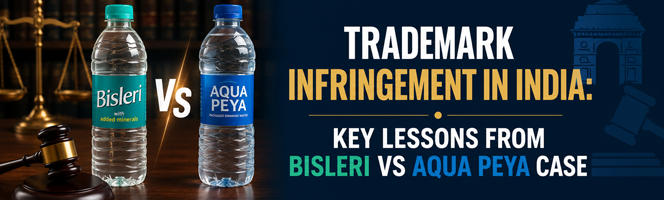
The Bisleri vs Aqua Peya trademark dispute highlights the importance of protecting intellectual property rights and maintaining a unique brand identity in India.

Explore the legal implications of AI-generated brand names, trademarks, branding risks, and the steps businesses should take to secure trademark protection.

WhatsApp chats have become an important form of electronic evidence in Indian legal proceedings, including divorce, family disputes, civil matters, and criminal cases.

This blog explains the importance of Intellectual Property (IP) protection for Instagram businesses, creators, influencers, and startups. It highlights how trademark registration helps protect brand identity, logos, content, and business reputation.