
Can Ancestral Property Be Sold Without Consent of Successors?

Property disputes are among the most frequent cases seen in India. One of the common scenarios is the topic of ancestral property and whether a father or any coparcener can sell the property without the consent of the legal heirs. Many people think, “Can a father sell the ancestral property without the consent of the legal heirs?” This topic must further dissected to understand what ancestral property rights exist to find how Indian law addresses property rights, inheritance laws, and legal partition of property.
This blog considers can an owner sell an ancestral property unilaterally; the rights of the successors; and how Indian courts consider inheritance issues.
What is Ancestral Property?
Under Hindu law the property that is inherited, for up to four generations, linearly, by fathers only, and which has not been divided, is referred to as ancestral property. Self-acquired property is property where the owner has the right to sell, gift, or will the property without restrictions from others or due process under law.
In the case of ancestral property, all coparceners, which usually, include sons, daughters after the amendment (2005), and other legal heirs have a birth right in ancestral property. Ancestral property rights of the successors are equal and present automatically at birth; meaning at birth every successor becomes a joint owner, before the dividing of property and equal distribution.
So, selling ancestral property is not just about ownership, but the legal/inheritor rights of other successor coparceners and the legal definition of inheritance laws in India.
Successors' Rights to Ancestral Property
One of the most important aspects of successors' rights to ancestral property is that these rights were not created by a will or a gift; they are rights that successors receive simply by being born. In other words, the successor has an indissoluble interest in the property until a legal partition occurs.
Some important aspects of successors’ rights to ancestral property include:
- No single coparcener can assert sole ownership of the entire property.
- Even the Karta (head of family) only has limited powers and cannot simply sell the property whenever he likes.
- All coparceners can insist on a legal partition of property, so they will receive their rightful distributions.
Therefore, by selling ancestral property without the successors' consent, the ancestor's property rights of succession are violated, and the sale is usually legally defensible.
Inheritance Laws in India Governing Ancestral Property
The matter of whether ancestral property can be sold without consent of coparcenars is intrinsically linked with the laws of inheritance in India. According to Hindu succession law, property that was inherited by a Hindu from his father, grandfather, or great-grandfather is considered ancestral.
The laws of inheritance in India, as discussed, state that all coparcenars share equal and undivided shares in such property. Thus, any dealing in the form of sale, transfer or mortgage must coincide with, and respect, these rights. Courts have repetitively stated that absent legal necessity, or for purposes of family benefit, the sale of ancestral property, without consent of coparceners, is not valid.
In the personal law of Muslims and Christians, ancestral property operates differently, although the inheritance laws in India will allow legal heirs their right share absent the laws of inheritance.
Can Ancestral Property Be Sold Without Consent?
By law, a coparcener or Karta cannot dispose of ancestral property without the concurrence of other coparceners, except where the disposition was made for "legal necessity" or for the "benefit of the estate". Examples of legal necessity include but are not limited to:
- Paying ancestral debts;
- Disbursement of essential family expenses;
- Necessary maintenance of the property.
Outside of this, any such disposition would be considered a breach of ancestral property rights and a court could invalidate the sale subsequent to a legal challenge by successor/s on behalf of the decedent to obtain legal partition of the property to claim their share of the same. In sum, it would be correct to state that while self-acquired property would generally be able to be sold with few limitations, ancestral property does not share this same characteristic under the rules of inheritance law in India.
Legal Partition of Property: The Solution
When there are disagreements regarding the sale of ancestral property, the best remedy is to move for a legal partition of property. A legal partition of property allows joint property to be divided into the respective shares of all coparceners and serves as a legal declaration that all coparceners are now independent owners of their respective portions of property.
After a legal partition of property, heirs are free to deal with their share of property independently, including selling or transferring their share of property. Until a legal partition occurs, no coparceners can sell or transfer property while acting unilaterally.
Hence, legal partition of property is both a remedy to disputes but also can serve as a protectant of ancestral property rights under the inheritance laws of India.
Judicial Position on Sale of Ancestral Property
Indian courts have consistently protected the rights of successors of ancestral property. The courts ruled that a sale without the consent of the successors and for the benefit of the family could be challenged in the Courts and declared null and void. The courts also encourage the legal partition of property to avoid unnecessary disputes.
For example, in many judgments, the Supreme Court has stated that successors have equal rights to ancestral property and that inheritance laws in India will not allow a coparcener to arbitrarily alienate ancestral property.
Conclusion
In India, an ancestral property cannot be sold without the consent of all successors, and, in fact, they hold equal and automatic rights to the ancestral property by birth, which is safeguarded under the inheritance act in India. A sale is void without the consent of successors unless it is necessitated by superseding legal reasons or is in the interest of the family as a whole.
Ideally, a proper remedy in these types of cases is to ask for a partition of property. A partition will allow all the heirs to get what is rightfully theirs. By bringing property partition lawsuits in accordance with the process under the applicable law, you can limit any disputes that arise while allowing for the necessary adherence to the fundamental elements of property rights for the heirs with the utmost respect.
Finally, it should be noted that under the inheritance laws in India, ancestral property cannot be sold without the consent and agreement of the successors, and even more importantly, the fact that the sale violates the rights of all other successors can be the basis of a legal challenge that may invalidate the sale. The protection is in recognizing the rights of the successors, and in taking appropriate action for a partition of property, if and when needed.
Latest Blog

Learn how professional legal drafting can protect your rights, prevent disputes, reduce legal risks, and strengthen your position before a case reaches court.

Understand when a husband can seek maintenance from his wife under Indian law. Learn about interim maintenance, financial dependency, court factors, and legal remedies.

Know the immediate steps to report online fraud, recover your money, file a cyber crime complaint, and seek legal assistance in India.

Social Media Defamation in India: What Indian Law Says explains how false statements, fake reviews, edited images, and misleading social media posts can damage the reputation of individuals and businesses.

This blog explains the importance of professionally drafted business contracts, including Vendor Contract Agreements, Client Service Agreements, and other commercial legal documents.
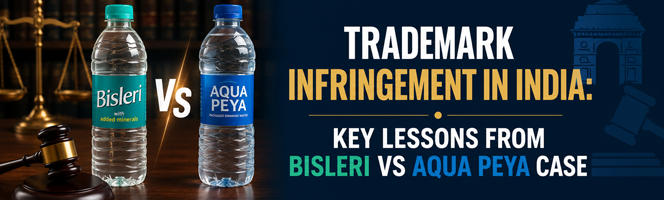
The Bisleri vs Aqua Peya trademark dispute highlights the importance of protecting intellectual property rights and maintaining a unique brand identity in India.

Explore the legal implications of AI-generated brand names, trademarks, branding risks, and the steps businesses should take to secure trademark protection.

WhatsApp chats have become an important form of electronic evidence in Indian legal proceedings, including divorce, family disputes, civil matters, and criminal cases.

This blog explains the importance of Intellectual Property (IP) protection for Instagram businesses, creators, influencers, and startups. It highlights how trademark registration helps protect brand identity, logos, content, and business reputation.