How to Update Your Marriage Certificate Online

Your marriage certificate is one of the most important legal documents you will ever hold. It serves as official proof of your marriage and is required for passport applications, name changes, joint bank accounts, insurance claims, visa processing, and property-related transactions. But what happens when there is a mistake in it?
Whether it is a spelling error in a name, a wrong date of birth, an outdated address, or missing details, getting a marriage certificate corrected online in India has become significantly more accessible as government services continue to move digital. This guide covers every situation — name correction, address change, spelling mistakes, state-specific portals — and tells you exactly when you need a lawyer.
Why Your Marriage Certificate Matters Legally
Under Indian law, marriage registration is governed by different personal laws depending on religion: the Hindu Marriage Act, 1955; the Special Marriage Act, 1954; the Christian Marriage Act, 1872; and the Parsi Marriage and Divorce Act, 1936.
Regardless of which law applies to you, the marriage registration certificate is your primary legal proof of marriage. Courts, immigration authorities, banks, and government offices all rely on it. Any inaccuracy — even a minor spelling error — can cause serious delays in legal and administrative processes, which is why correcting it promptly is important. You can also read about the difference between online and offline marriage registration to understand how this process works from the beginning.
When Do You Need to Correct or Update Your Marriage Certificate?
Most people discover the need for a correction in one of these common situations:
- Spelling errors in name — A typo entered during original registration that does not match your Aadhaar card or passport.
- Name correction after marriage — When a spouse adopts a new surname or changes their full name and wants it correctly reflected on the certificate.
- Address change — Your current address differs from what was recorded at registration and you need all documents to match for official purposes.
- Missing or incomplete details — Middle names, nationality, place of marriage, or parent details that were left out at the time of registration.
- Date or age errors — Wrong dates of birth or an incorrect marriage date entered by the registrar.
- Spelling mistakes in parents' names — A frequent problem when certificates are cross-checked during visa or immigration applications.
Correcting these errors promptly prevents them from creating larger complications later — particularly when the certificate is used as supporting evidence in matters involving marital disputes or mutual divorce proceedings.
How to Update Your Marriage Certificate Online — Step by Step
Most state governments in India now offer marriage certificate correction through official e-governance portals. The exact interface varies by state, but the process follows a consistent structure.
Step 1: Visit Your State's Official Marriage Registration Portal
Each state has its own portal — Delhi uses the MCD portal, Maharashtra uses Aaple Sarkar, Rajasthan uses the SSO portal. If you are unsure which applies to you, search "[your state] marriage certificate correction online" or consult a legal professional near you for guidance.
Step 2: Log In or Create an Account
Returning users can log in with existing credentials. New users will need to register with their name, mobile number, and email address. Keep your phone accessible — OTP verification is standard on most state portals.
Step 3: Navigate to the Marriage Certificate Correction Option
Inside the dashboard, look for the marriage services section. Depending on your state, this may be labelled "certificate correction," "amendment request," or "update application."
Step 4: Fill in the Required Details Accurately
You will need to provide your original marriage certificate number, both spouses' names, date of marriage, and a clear description of what needs to be corrected — for example, "Name spelling: 'Priya Sharma' should read 'Priya Verma'." Double-check every field before proceeding. Inconsistencies between what you enter and your supporting documents are the most common reason for rejection.
Step 5: Upload Supporting Documents
The standard document set required across most Indian states includes:
- Original marriage certificate (scanned copy)
- Valid ID proof for both spouses — Aadhaar card, passport, or voter ID
- Current address proof
- A notarised affidavit explaining the reason for correction
- Supporting evidence for the specific change (for example, a passport or Aadhaar card reflecting the correct name)
Step 6: Pay the Applicable Fee
Correction fees are nominal, typically ranging from ₹50 to ₹500 depending on the state and the nature of the correction. Payment is accepted via debit card, credit card, UPI, or net banking.
Step 7: Submit and Track Your Application
After reviewing everything, submit the application. You will receive an acknowledgement number via SMS or email. Use this number to track the status of your correction request directly on the same portal.
Step 8: Verification and Issuance of Corrected Certificate
The concerned registrar's office will verify your application and uploaded documents. If everything is in order, the corrected marriage certificate is issued digitally. You will be notified via SMS or email and can download the updated certificate from the portal.
How to Correct Name in Marriage Certificate Online
Name correction is the most commonly requested change on Indian marriage certificates — and also one of the more sensitive from a legal standpoint.
If your name appears incorrectly due to a registrar's error (for example, "Meena" recorded as "Meera"), the process is relatively straightforward: file a notarised affidavit declaring the correct name, submit it alongside your Aadhaar or passport as supporting identity proof, and apply through your state's online portal.
If you are looking to formally change your name after marriage — such as adopting your spouse's surname — the process is different. It typically involves a gazette notification in addition to the certificate update, and the two processes must be completed in a specific sequence. A legal expert in marriage registration can guide you through this distinction and ensure consistency across all your documents.
How to Change Address in Marriage Certificate Online
If you have moved cities or states after your marriage, you may need the address on your certificate updated — particularly when it is being submitted for visa or immigration purposes, or when opening joint accounts where address consistency is required.
For an address correction, the most commonly required supporting documents are:
- Current utility bills (electricity or water) in your name
- Aadhaar card reflecting the updated address
- Rent agreement or property documents if applicable
- A notarised affidavit from both spouses confirming the address change
Note that in some states, address corrections require a fresh application at your new local registrar rather than an online amendment — particularly if the original marriage was registered in a different state. Delhi residents and Mumbai-based applicants often encounter this situation when they have relocated from their home state.
How to Correct Spelling Mistakes in Marriage Certificate
Spelling mistakes — whether in your own name, your spouse's name, or your parents' names — are treated as administrative errors and are among the easiest corrections to process online, provided you have the right supporting documents.
The key document is a notarised affidavit that clearly states the incorrect spelling as it appears on the certificate and the correct spelling as it should appear, along with your reason for the correction. This must be supported by at least two government-issued documents that carry the correct spelling.
Common pitfall: even a single character difference between your affidavit and your ID document (for example, "Suresh Kumar" vs. "Suresh K.") is treated as a discrepancy and can lead to rejection. Make sure every document you submit spells the name identically.
State-wise Online Portals for Marriage Certificate Correction
The process is broadly similar across India, but the specific portal you use matters. Here is a quick reference:
- Maharashtra: Aaple Sarkar portal (aaplesarkar.mahaonline.gov.in)
- Rajasthan: SSO Rajasthan (sso.rajasthan.gov.in)
- Andhra Pradesh: MeeSeva portal
- Tamil Nadu: Tamil Nadu e-District portal
- Kerala: Akshaya portal / Civil Registration System
- Gujarat: Digital Gujarat portal (digitalgujarat.gov.in)
- Delhi: MCD online services portal (mcdonline.nic.in)
- Uttar Pradesh: e-Nagar Seva portal — for residents in Lucknow and other UP cities
- Goa, Chandigarh, and Union Territories: Contact the local Municipal Council or Civil Registration office directly
If your state's portal is not listed here, or if you are facing technical difficulties uploading documents, it is worth consulting a legal professional familiar with your region.
Common Problems During Online Marriage Certificate Correction
Even in straightforward cases, applicants regularly hit these obstacles:
- Document mismatch: The name on your affidavit does not exactly match your Aadhaar or passport. Even minor formatting differences are flagged as discrepancies.
- Affidavit defects: An improperly drafted affidavit — wrong format, missing notarisation, or vague language — is rejected outright without explanation in many states.
- Portal technical errors: Many state portals have strict file size limits or format restrictions that are not clearly communicated upfront. Compress your PDFs and convert to JPEG where the portal allows.
- Offline correction required: Some corrections — particularly those involving the date of marriage or a name change of more than one character — may require a physical visit to the Registrar's office, even in states with otherwise functional online systems.
- Jurisdictional issues: If you were married in one state but now live in another, you will typically need to approach the registrar in the state where the marriage was originally registered, not where you currently reside.
When to Involve a Marriage Lawyer
Not every correction requires professional legal help — but some situations genuinely do. You should consider involving a lawyer if your case involves:
- Large discrepancies such as a completely incorrect date of marriage or a substantially different name
- Cross-state jurisdiction where you were married in one state and now live in another
- A correction that is linked to an ongoing matrimonial dispute or family law matter
- Repeated rejection of your online application without a clear reason
- A name change that requires gazette notification in addition to the certificate amendment
A lawyer can draft a legally sound affidavit, handle communications with the registrar's office, and manage escalations if your application is wrongly rejected. For matters that overlap with broader family law concerns, matrimonial conciliation may also be a useful parallel process. Read our guide on when hiring a lawyer is genuinely worth it to help you decide.
Frequently Asked Questions
Can I change my name entirely on a marriage certificate, not just correct a spelling?
Yes, but a complete name change requires a gazette notification in most Indian states, in addition to the certificate amendment. This is a more involved process and is best handled with legal assistance to ensure all your documents are updated consistently.
Can we change the address in a marriage certificate online?
Yes. An address update is one of the most common corrections applied for. You will need your current address proof and a notarised affidavit confirming the change. In some states, this requires a visit to the registrar rather than a purely online process.
Is it possible to correct the date of marriage on the certificate?
Date corrections are among the most scrutinised. You will typically need strong supporting evidence — witnesses, photographs, or religious institution records from the original date — and the process often requires physical verification rather than a purely online one.
How long does the online correction process take?
In most states, applications are processed within 7 to 21 working days after document verification. Complex corrections involving dates or major name changes can take longer.
What if my marriage was registered in a different state from where I currently live?
You will need to apply through the registrar's office in the state where the marriage was originally registered. Corrections through a different state's portal will not be accepted.
Can spelling mistakes in parents' names on a marriage certificate be corrected?
Yes. This is treated as an administrative correction. Submit the correct spelling with supporting documents — your parents' Aadhaar or voter ID — and a notarised affidavit explaining the error.
What is the fee for correcting a marriage certificate online?
Fees typically range from ₹50 to ₹500 depending on the state and the type of correction. Fee structures are published on each state's official portal.
How LawChef Helps With Marriage Certificate Corrections
LawChef has a team of experienced family lawyers who handle marriage certificate corrections, amendments, and related matrimonial documentation across India. From drafting legally sound affidavits to following up with registrar offices, the team manages the entire process on your behalf.
If you are also dealing with related matters — name change documentation across multiple government IDs, fresh marriage registration, property transfers post-marriage, or family law questions — LawChef offers end-to-end marriage registration and certificate services with transparent pricing and regular status updates throughout the process.
You can also connect with LawChef lawyers based in your city — including Delhi, Mumbai, Lucknow, Noida, Hyderabad, and Ahmedabad.
Conclusion
A marriage certificate with incorrect details is not just an inconvenience — it is a document that creates friction in legal, financial, and administrative processes at the worst possible times. The good news is that India's shift to digital governance has made online corrections far more accessible than they were five years ago.
The process works smoothly when your documents are in order and your application is filed correctly the first time. But if you are dealing with a complex correction — cross-state jurisdiction, a major discrepancy, or an error that involves multiple linked documents — getting professional legal assistance upfront is almost always faster and less expensive than handling a rejection and re-filing from scratch.
For related reading, you may also find these LawChef guides useful:
Latest Blog

Learn about the legal remedies available when police refuse to register an FIR for a cognizable offence under the BNSS. Understand the role of the Superintendent of Police, Magistrate, Section 173(4), Section 175(3), and Zero FIR.
Learn how professional legal drafting can protect your rights, prevent disputes, reduce legal risks, and strengthen your position before a case reaches court.
Understand when a husband can seek maintenance from his wife under Indian law. Learn about interim maintenance, financial dependency, court factors, and legal remedies.
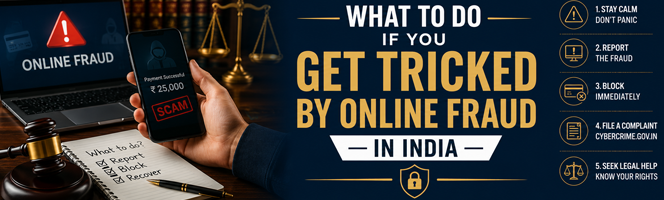
Know the immediate steps to report online fraud, recover your money, file a cyber crime complaint, and seek legal assistance in India.
Social Media Defamation in India: What Indian Law Says explains how false statements, fake reviews, edited images, and misleading social media posts can damage the reputation of individuals and businesses.

This blog explains the importance of professionally drafted business contracts, including Vendor Contract Agreements, Client Service Agreements, and other commercial legal documents.
The Bisleri vs Aqua Peya trademark dispute highlights the importance of protecting intellectual property rights and maintaining a unique brand identity in India.
Explore the legal implications of AI-generated brand names, trademarks, branding risks, and the steps businesses should take to secure trademark protection.

WhatsApp chats have become an important form of electronic evidence in Indian legal proceedings, including divorce, family disputes, civil matters, and criminal cases.